Amersham, Buckinghamshire — covering Bucks, Herts, Surrey, Berks & London
charliebjoyce98@gmail.com 07777 722212
Evergreen Tree Care
07777 722212Get Free Quote
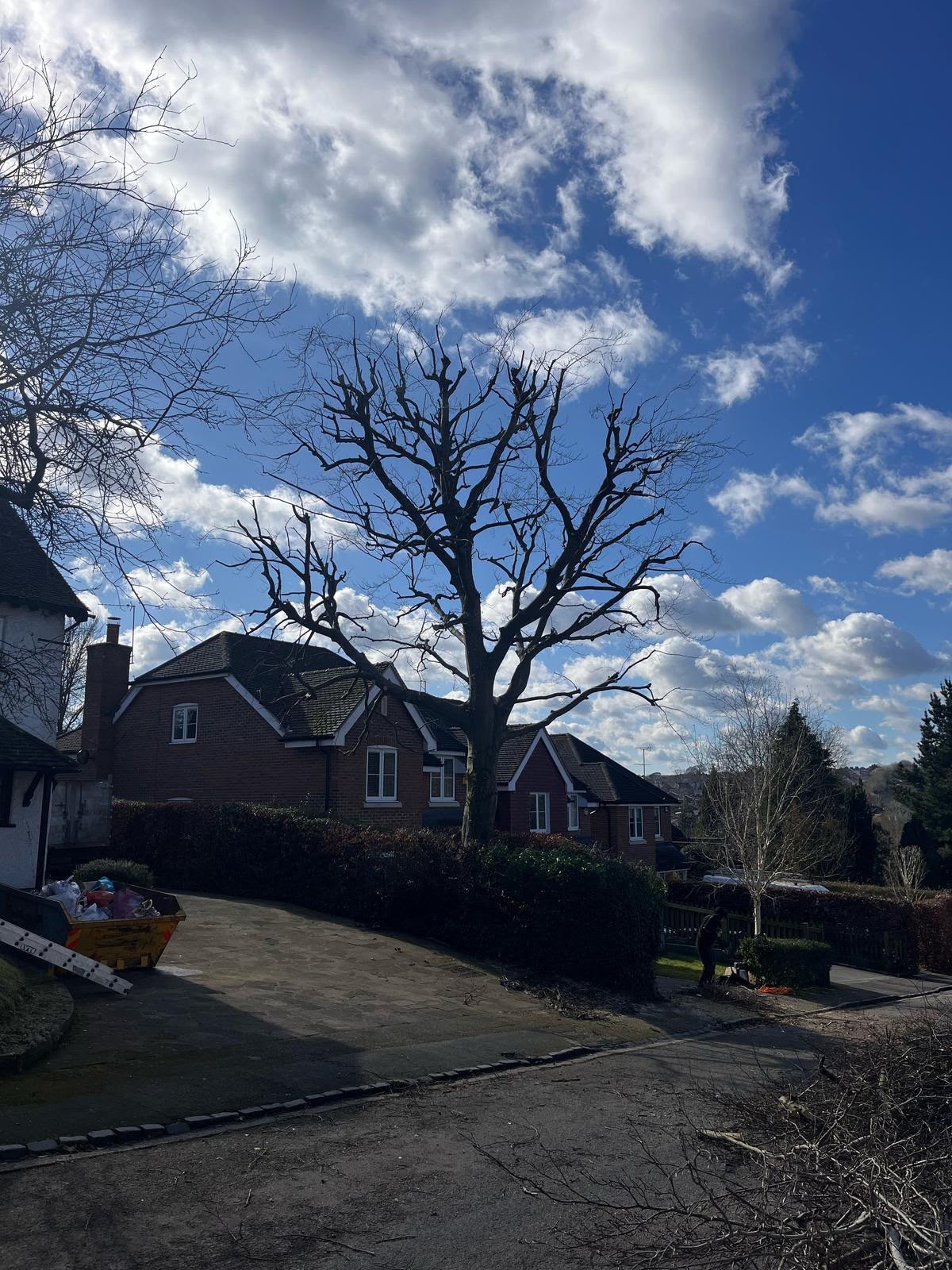
Mature deciduous tree after a hard pollard, branches cut back to stubs over a Buckinghamshire home
Cyclical pruning · manageable mature trees · Amersham & Home Counties

Tree Pollardingin Amersham &Buckinghamshire.

Repeat pruning cycles that keep large trees at a manageable height and volume for decades — without repeatedly removing and replanting mature amenity trees.

Fully qualified & ticketed climbers · 10+ years' experience · TPO paperwork handled · Guarantee on every job.

  • 10+ Years' Experience
  • Fully Qualified & Ticketed
  • Registered Waste Carrier
  • Guarantee on Every Job
  • Free Site Visits & Quotes

Overview

Tree Pollarding — what it is and when it's needed.

What it is

Pollarding is a traditional pruning system: the tree's upper crown is removed back to a set point ('pollard head') and then cyclically re-cut every few years to control size while maintaining a mature, characterful tree. It's very different from topping — pollarding is a planned management system carried out on suitable species from a young age, or a continuation of an existing pollard cycle on an older tree.

Who it's for

Homeowners who inherit an already-pollarded tree that needs its next re-cut; landowners with pollard-tolerant species (lime, willow, London plane, some willows and poplars) that need long-term size control; and property owners retaining mature amenity trees where a full reduction would be inappropriate.

When it's needed

Established pollards need re-cutting on a cycle — often 2–5 years depending on species and vigour. Neglected pollards left for decades can sometimes be restored, but the results depend on species and previous management. New pollards should only be initiated on young, suitable trees.

Why professional help matters

Pollarding is one of the oldest arboricultural techniques and, done properly, can keep a tree alive far longer than it would naturally live. Done wrongly — or applied to a species that doesn't tolerate it — it kills or ruins the tree. Species selection, cut placement and timing all matter.

What happens if it's ignored

Small problems don't stay small.

Pollarding is one of the most misunderstood tree operations. Get it wrong and you either kill the tree or unleash years of unsafe regrowth.

Wrong species pollarded

Some species (beech, oak, most conifers) do not tolerate pollarding well and can decline rapidly after heavy cuts.

Confused with topping

A one-off horizontal 'top' is not pollarding. It leaves the tree structurally worse than it started.

Neglected pollard cycles

A pollard left uncut for decades develops huge, heavy limbs on weak union points — a well-known failure mode.

Missed council consent

Pollarding a protected tree without consent is an enforceable breach — even if you 'just did what was done before'.

Wildlife impact

Pollard cavities are important habitat. Cuts in the wrong season can disturb bats or nesting birds.

Common mistakes we see

The commonest mistake is starting a pollard cycle on a mature tree that was never meant to be pollarded — usually because 'it's got too big'. That's a reduction or removal decision, not a pollarding one. We'll tell you honestly which applies to your tree.

Our Process

A clear step-by-step system.

  1. 01

    Species & History Check

    We identify the species, confirm whether it tolerates pollarding, and look for evidence of previous pollard points before recommending anything.

  2. 02

    TPO / Conservation Check

    If the tree is protected, we prepare and submit the application to the council on your behalf.

  3. 03

    Cut Plan Agreed

    For repollards, we agree cut points on the existing pollard heads. For new pollards, we agree height, form and future cycle length.

  4. 04

    Skilled Climbing & Cuts

    A qualified climber makes clean cuts at the correct points, using rigging where required to lower material safely.

  5. 05

    Clean-Down & Cycle Plan

    All arisings removed under our waste carrier registration, and you leave with a clear indication of when the next re-cut should happen. Guarantee on every job.

Why it's worth doing properly

The benefits — concrete, not vague.

Long-term size control

Mature amenity trees kept at a manageable size for decades.

Retained character

Old pollards are unique specimens — pollarding keeps them alive and functional.

Wildlife value

Well-managed pollards develop cavities and habitat that new trees can't replicate for a century.

Predictable cycles

You know roughly when the next visit is due, and can budget for it.

Reduced failure risk

Regular cycles keep new growth on sound, well-attached wood.

Cost-effective retention

Cheaper over 20 years than removing and replanting.

In detail

Everything you'd want to know before booking.

Methods, materials, variations and the specific situations this service applies to — so you know exactly what you're paying for.

Species that tolerate pollarding well

Pollarding is a species-specific technique.

  • Lime (Tilia) — the classic urban and estate pollard
  • London plane (Platanus × acerifolia) — very tolerant, holds shape well
  • Willow (Salix) — historically pollarded for withies
  • Poplar (Populus) — tolerant of hard cutting
  • Some maples and sycamore — case-by-case
  • Ash — traditionally pollarded, though now often removed due to dieback

Species we will not pollard

Beech, oak, cherry, birch and most conifers do not respond well to being pollarded from mature — for these species, we recommend proper crown reduction or, where genuinely needed, removal and replacement with a species better suited to the space.

Restoring a neglected pollard

Old pollards that have been left for 20–40 years often carry huge, heavy secondary limbs on weak union points. Restoration is possible on some species — usually by a phased reduction over several visits rather than a single hard re-cut — but on others it's genuinely too late and removal becomes the safer option. We'll always tell you honestly which applies.

Cycle length and timing

Cycles vary by species and setting — 2–3 years for vigorous species in confined spaces, up to 5+ years for slower growers. Most pollarding is carried out in late autumn or winter when the tree is dormant, subject to nesting-bird checks (March–August) under the Wildlife & Countryside Act 1981.

Recent work

Photos from real tree pollarding jobs.

Recent projects across Amersham and the surrounding Buckinghamshire villages.

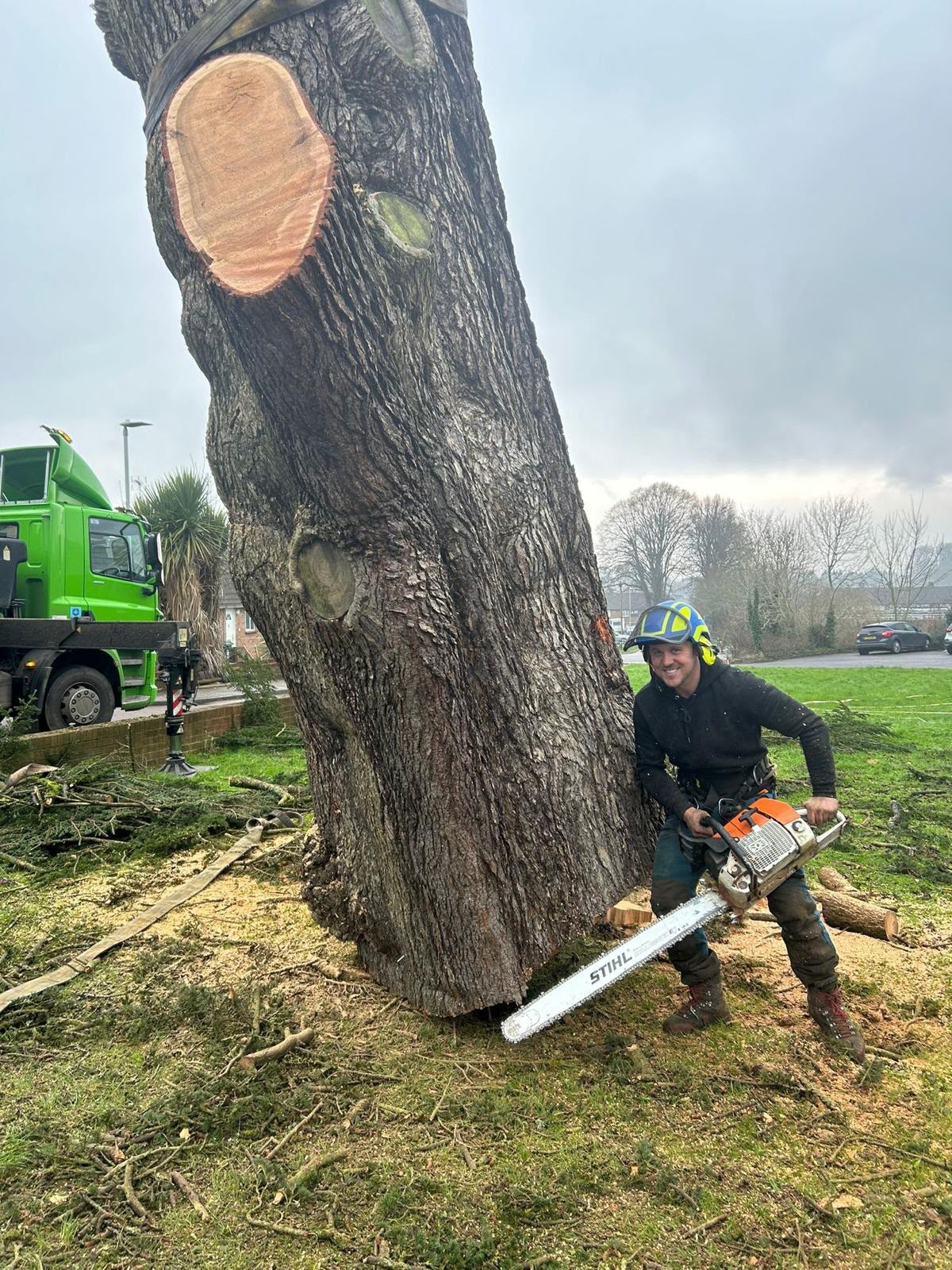
Tree surgeon with a Stihl chainsaw beside a large pollarded trunk showing a fresh cut face
Mature deciduous tree after a hard pollard, branches cut back to stubs over a Buckinghamshire home

FAQ

Answers to the questions we get most.

Don't see yours? Give us a call on 07777 722212 — happy to talk it through.

Is pollarding the same as topping?

No. Pollarding is a planned cyclical management system carried out on suitable species. Topping is a one-off flat cut across the leader and is destructive. We don't top trees.

How much does tree pollarding cost?

Priced per tree based on size, access, TPO status and cycle length. Free site visit and fixed written quote.

Can any tree be pollarded?

No. Only species that tolerate hard cyclical pruning — mainly lime, London plane, willow, poplar and a few others. We'll advise honestly on your specific tree.

How often does a pollard need re-cutting?

Every 2–5 years, depending on species and vigour. We'll tell you where your tree sits on that range.

Do I need council permission?

Yes if the tree has a TPO or you're in a conservation area. We handle the application or notification on your behalf, or you can submit it yourself if you'd prefer.

My tree hasn't been pollarded for 30 years — can it be restored?

Sometimes. On tolerant species, a phased approach over several visits can work. On less tolerant species or heavily neglected trees, removal may be safer — we'll tell you honestly which applies.

Will pollarding damage my tree?

Not when done correctly, on the right species, at the right time. Pollarded trees can outlive their un-pollarded counterparts by decades.

Is the work guaranteed?

Yes. Every job we complete carries a guarantee.

Related services

Crown Reduction, Thinning & Lifting

Learn more

Tree Maintenance

Learn more

Tree Removal

Learn more
← HomeAll servicesService areasContact

Ready for a free, no-obligation quote?

Local Amersham team. Fully qualified & ticketed. Registered Waste Carrier. Guarantee on every job. Fixed written price before we start.

Get My Free Quote 07777 722212
Call NowGet Free Quote